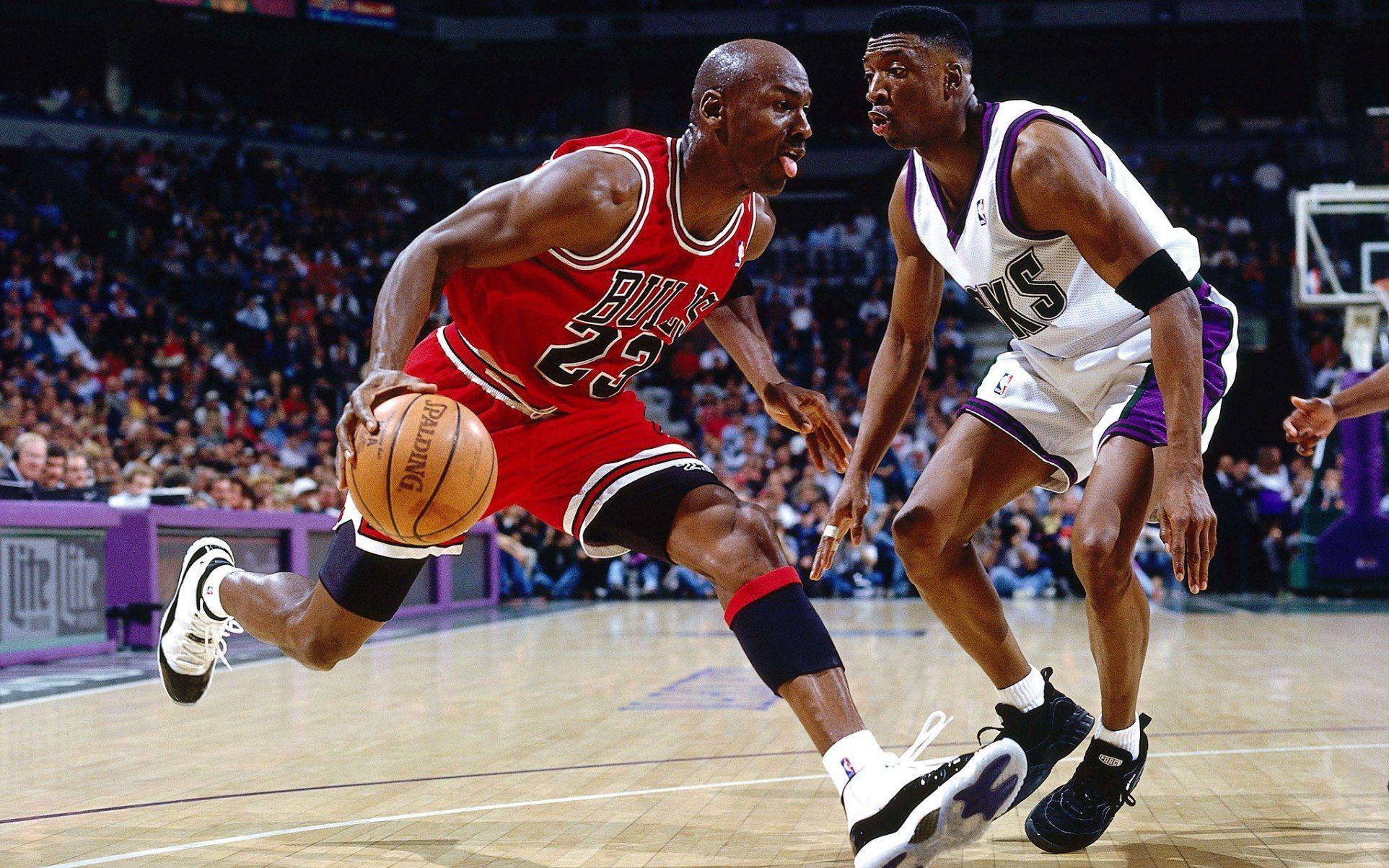
He’s just hanging there.
That’s usually the first thing people notice when looking at famous Michael Jordan pictures. He isn’t just jumping; he’s defying physics. It’s been decades since he last suited up for the Chicago Bulls, yet these images remain the gold standard for sports photography. You see them in barbershops, dorm rooms, and high-end art galleries.
But here is the thing: many of these shots weren't just "lucky." They were the result of calculated positioning by legendary photographers and, in some cases, a secret signal from MJ himself.
The Secret Signal of the 1988 Dunk Contest
Everyone knows the photo. Jordan is soaring from the free-throw line, legs tucked, ball cocked back. It looks like he’s walking on air.
Walter Iooss Jr., a titan in the world of sports photography, was the man behind the lens for that iconic moment. But he didn't just stand there and hope for the best. Before the contest even started, Iooss asked Jordan for a favor. He needed to know where Mike was going so he wouldn't be blocked by the hoop or a stray official.
Jordan told him, "Before I go out to dunk, I'll put my index finger on my knee and point which way I'm going."
Crazy, right?
During the actual event, Jordan actually remembered. He sat on the bench, looked over at Iooss, and pointed his finger to the left. Iooss moved his entire setup to the right side of the basket to get that clear profile shot. When Jordan took off, he landed almost right in the photographer’s lap. That split-second of communication gave us arguably the most famous basketball photo ever taken.
The Jumpman: A Mistake That Became a Brand
You might think the Jumpman logo was captured during a real game. It wasn't.
It actually started as a photo shoot for Life Magazine in 1984 before the Olympics. Photographer Co Rentmeester had Jordan perform a "grand jeté"—a ballet move—rather than a traditional dunk. Jordan wasn't even wearing Nikes in the original shot; he was wearing New Balance.
Nike eventually hired their own photographer to recreate the pose with Jordan wearing the Air Jordan 1s against the Chicago skyline. That silhouette became the logo. Rentmeester actually sued Nike decades later, claiming they ripped off his creative vision, but the courts eventually ruled in Nike's favor. Basically, the most valuable logo in sports history was a choreographed dance move.
"The Shot" and the Agony of Craig Ehlo
In 1989, the Bulls were playing the Cleveland Cavaliers in a do-or-die Game 5. Jordan hit a hanging jumper at the buzzer to win the series.
The most famous picture of this moment shows Jordan mid-air, fists pumping in celebration, while Craig Ehlo collapses to the floor in the background. It’s the perfect representation of sports: pure ecstasy on one side, total devastation on the other.
What’s wild is that photographer Carl Sissac captured this from an elevated angle that shows just how high Jordan jumped. If you look closely at the crowd in that photo, you can see every single person's face frozen in a different stage of disbelief. It’s a 1/500th of a second that tells an entire story of a city's heartbreak.
Why the "Last Shot" Was So Hard to Get
The 1998 Finals in Utah. Game 6. The "Last Shot."
Capturing this was a nightmare for the NBA Photos team. They actually used a system called the "Flash Wizard." It tethered multiple film cameras together so that when the lead photographer hit the remote trigger, everything fired at once.
The legendary shot showing the ball just leaving Jordan's hand while the crowd watches in terror was actually taken by Fernando Medina. He was what they called a "human drone"—a photographer tasked with keeping the focus perfect while someone else triggered the shutter.
- The Crowd: Look at the kid in the front row with his hands on his head.
- The Clock: You can see the 5.2 seconds remaining.
- The Form: Perfectly balanced, despite the push-off on Bryon Russell (don't tell a Jazz fan I said that).
The Raw Emotion of 1991
After years of being told he couldn't win the "big one," Jordan finally beat the Lakers in '91.
The most famous photo from that night isn't of a dunk. It’s Michael in the locker room, hunched over the Larry O'Brien trophy, sobbing. His father, James Jordan, is right there with him, hand on his shoulder.
It’s one of the few famous Michael Jordan pictures where he looks human. Not a "Bejeweled Demigod" or an airborne freak of nature. Just a guy who finally reached the top of the mountain. Most fans remember the intensity, but that photo reminds us of the cost of that obsession.
How to Collect Iconic MJ Photography
If you're looking to own a piece of this history, don't just grab a cheap poster from a big-box store. Authenticity matters, especially in the 2026 market.
- Look for PSA Type 1 Photos: These are original prints made from the original negative within two years of the photo being taken. They are the "Gold Standard" for collectors.
- Verify the Photographer: Prints signed by Walter Iooss Jr. or Andrew Bernstein carry significantly more value than generic reprints.
- Check the "Upper Deck" Hologram: For signed photos, Upper Deck has had an exclusive contract with Jordan for years. If it doesn't have their authentication, be very skeptical.
Go look at the "Wings" poster again. The one with the William Blake quote about soaring. It’s not just a Nike ad anymore; it’s a piece of 20th-century art. Honestly, we might never see another athlete whose career was documented with such cinematic perfection.